By George Klein
Why Configuration Management Matters in a Security Program
In the previous posts in this series, we established that risk assessments define what matters and vulnerability management drives remediation. The next challenge is preventing those weaknesses from reappearing. That is the role of configuration management.
Configuration management is the control layer of a security program. It ensures systems are built, deployed, and maintained according to secure, consistent standards. Without it, environments drift over time – introducing misconfigurations that create new vulnerabilities faster than teams can remediate them.
Across modern environments – on-prem, cloud, and hybrid – misconfiguration remains one of the most common root causes of security incidents. A mature configuration management practice reduces this risk by making security repeatable rather than dependent on individual administrators.
What Configuration Management Is (and Is Not)
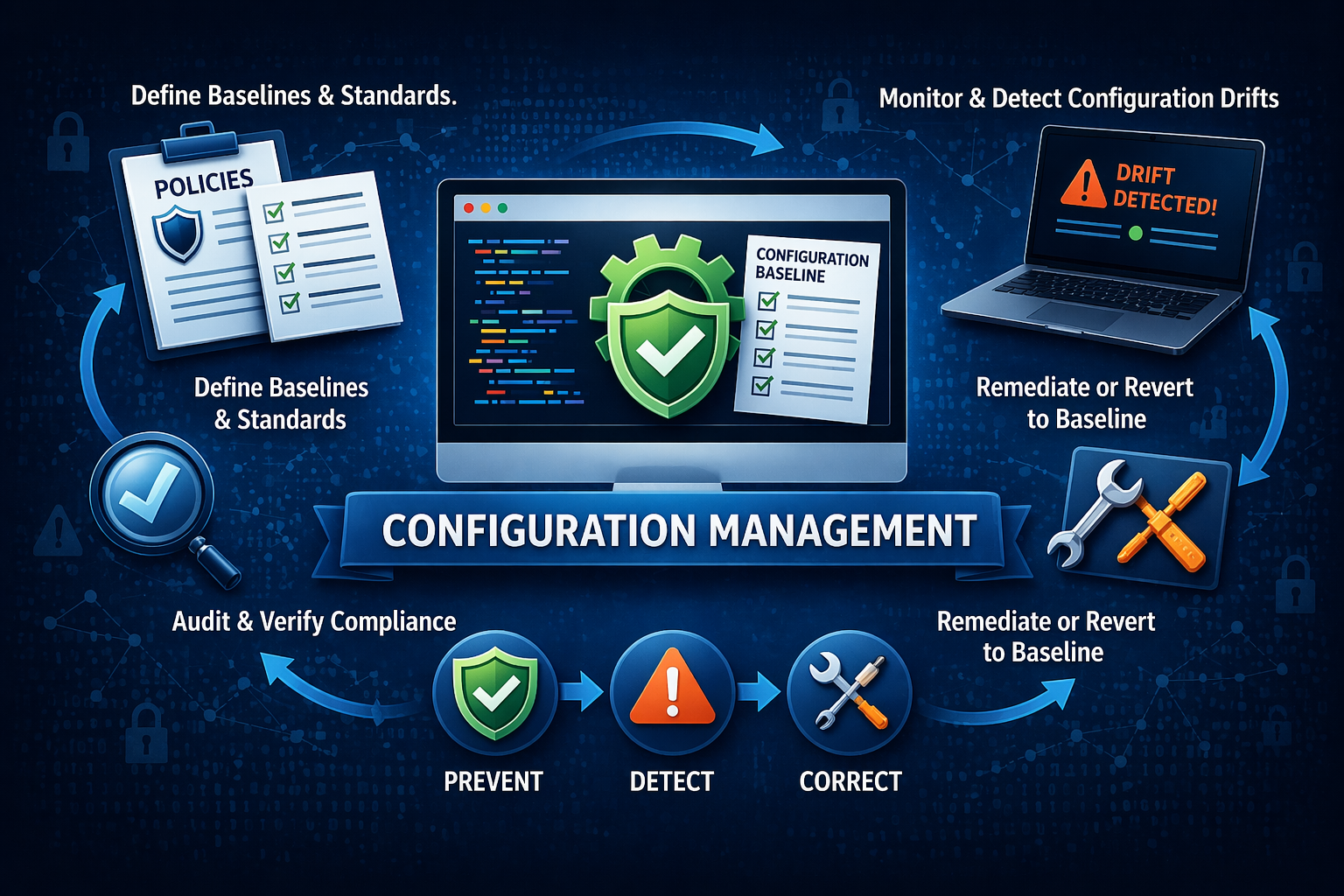
Configuration management is a continuous process used to define, implement, monitor, and enforce secure system baselines across infrastructure, applications, and services.
At a practical level, configuration management answers key questions:
- What does a secure system configuration look like for our environment?
- Are our systems currently aligned with that baseline?
- Where has drift occurred, and how quickly can it be corrected?
- How do we ensure new systems are deployed securely by default?
Configuration management is not:
- A one-time hardening exercise
- A collection of undocumented administrator preferences
- A compliance checklist performed annually
- A manual process that relies on individual expertise
Like vulnerability management, configuration management is a continuous operational discipline.
The Core Components of Effective Configuration Management
While implementation approaches vary, effective configuration management programs consistently include the following elements.
Secure Baseline Definition
Configuration management begins with defining what “secure” looks like.
Baselines are typically derived from:
- Industry frameworks (CIS Benchmarks, NIST guidance, vendor hardening guides)
- Organizational risk tolerance
- Operational requirements and constraints
A baseline should be both secure and practical. Overly restrictive configurations that break business processes will be counterproductive to operations.
Standardization and Deployment
Once defined, secure configurations must be standardized across the environment.
This includes:
- Building hardened system images
- Using infrastructure-as-code and configuration management tools
- Embedding security into provisioning workflows
The goal is to ensure systems are deployed securely by default, rather than hardened after the fact.
Continuous Monitoring for Drift
Configuration drift occurs when systems deviate from their approved baseline over time.
Drift can result from:
- Emergency changes
- Manual updates
- Software installations
- Misaligned automation
Continuous monitoring identifies these deviations quickly, allowing teams to correct them before they introduce risk.
Enforcement and Remediation
When drift is detected, organizations must be able to respond.
This may involve:
- Automated remediation (reverting to baseline)
- Alerting and ticketing workflows
- Integration with change management processes
Mature programs define clear ownership and SLAs for addressing configuration issues, ensuring they are not ignored.
Integration with Other Security Functions
Configuration management does not operate in isolation. It supports and is informed by other parts of the security program:
- Risk assessments: Define which systems require stricter controls
- Vulnerability management: Identifies misconfigurations as a source of risk
- Incident response: Relies on known-good configurations during recovery
Why Configuration Management Often Breaks Down
Despite its importance, configuration management is frequently inconsistent or underdeveloped.
Common failure points include:
- Lack of clearly defined baselines
- Over-reliance on manual configuration
- Inconsistent enforcement across environments
- Limited visibility into cloud and hybrid assets
- No process for managing configuration drift
These issues typically result in environments where each system is slightly different- making security difficult to measure and even harder to maintain.
Configuration Management in Modern Environments
As organizations adopt cloud platforms and distributed architectures, configuration management becomes more complex – and more critical.
In cloud environments, misconfigurations such as:
- Overly permissive access controls
- Publicly exposed storage
- Misconfigured identity roles
can introduce significant risk very quickly.
This makes automation essential. Configuration management in modern environments relies heavily on:
- Infrastructure as code (IaC)
- Policy enforcement tools
- Continuous compliance monitoring
These approaches allow organizations to scale securely without increasing manual overhead.
Configuration Management as a Preventative Control
If vulnerability management is reactive – identifying and fixing issues – configuration management is preventative.
It reduces the likelihood of vulnerabilities emerging in the first place by ensuring systems are configured securely from the start and remain that way over time.
This shift – from reactive remediation to preventative control – is a key characteristic of mature security programs.
Looking Ahead
Risk assessments define what matters. Vulnerability management addresses known weaknesses. Configuration management ensures those weaknesses do not reappear.
The final component of a mature security program focuses on the human element. In the next post, we will explore security awareness training and how organizations can reduce risk by strengthening user behavior.
Author Bio
George is a solutions engineer with three years of experience supporting organizations across modern IT environments. He holds CompTIA Network+, Security+, and PenTest+ certifications and has a strong interest in diving deep into the technical details behind security challenges. George is a lifelong learner who enjoys getting into the weeds of technology to better understand and solve complex problems. Outside of work, he is a proud new dad and family-focused individual who brings that same sense of responsibility and care into helping organizations strengthen their security posture.
Frequently Asked Questions About Configuration Management
What is configuration management in cybersecurity?
Configuration management is a continuous process used to define and enforce secure system baselines, ensuring systems are consistently configured to reduce risk and prevent misconfigurations.
What is configuration drift?
Configuration drift occurs when systems deviate from their approved baseline over time, often due to manual changes, updates, or inconsistent processes.
How is configuration management different from vulnerability management?
Vulnerability management identifies and remediates existing weaknesses. Configuration management prevents those weaknesses from emerging by enforcing secure configurations.
Do SMBs need formal configuration management?
Yes. Even smaller environments benefit from standardized configurations and automated enforcement, which reduce complexity and improve security consistency.