By Will Colleran
Why Vulnerabilities Are Easy to Find but Hard to Prioritize
Most IT leaders today are not struggling to find vulnerabilities. Security tools generate alerts, scanners produce reports, and vendors constantly release patches. The real challenge is deciding what to fix first.
For SMB IT teams, this challenge is even more pronounced. Limited staff, competing priorities, and growing infrastructure make it difficult to sort through hundreds, or sometimes thousands, of vulnerabilities and determine which ones actually present meaningful risk. Over time, many organizations begin to realize that vulnerability management is less about discovering issues and more about creating a process to prioritize and reduce risk effectively. One approach we’ve seen work well connects several security capabilities into a simple operational workflow.
How SMB IT Teams Reduce Cyber Risk in Practice
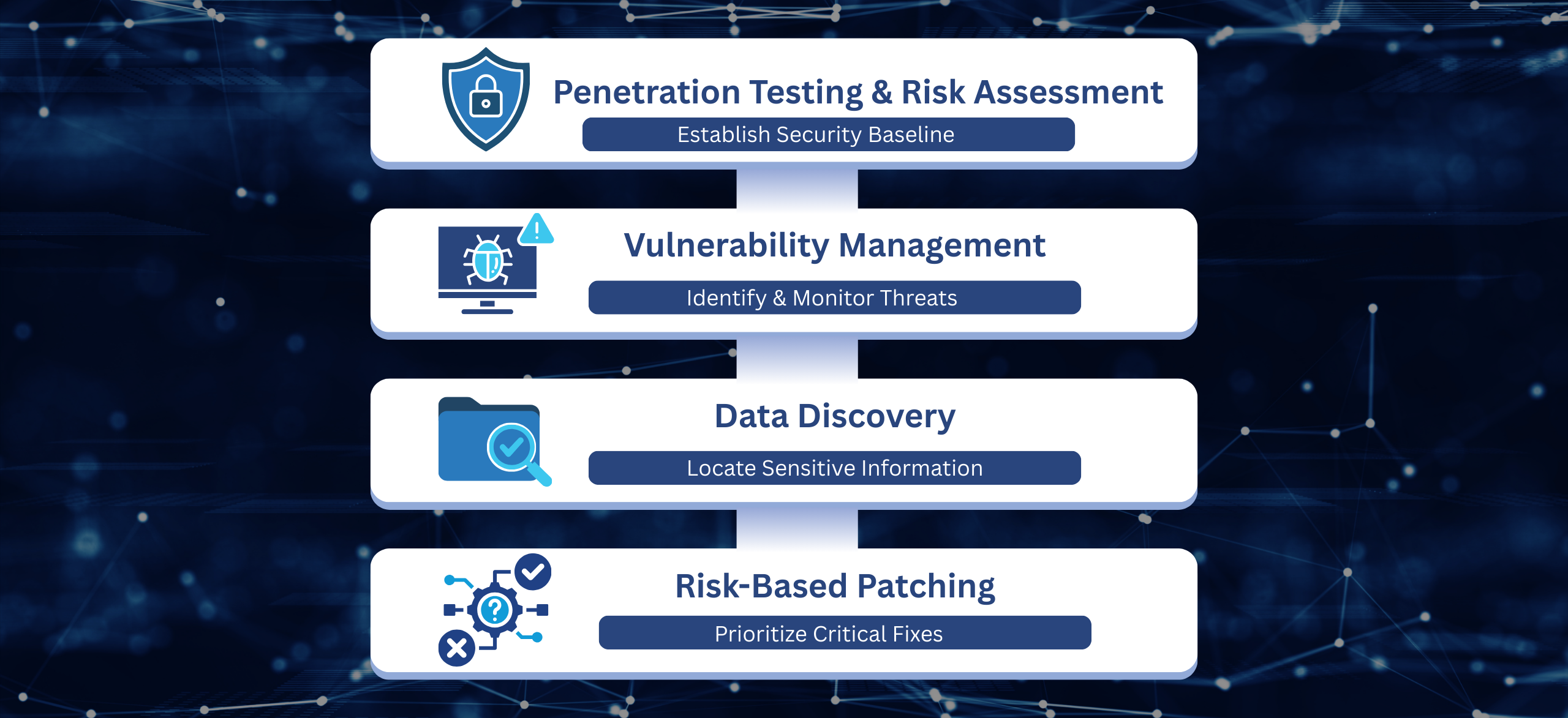
For SMBs, managing cybersecurity risk is often less about deploying more tools and more about connecting existing security processes. A practical risk-reduction workflow typically includes:
- Penetration testing or risk assessments to establish a baseline security posture
- Continuous vulnerability management to identify new security exposures
- Data discovery to understand where sensitive information resides
- Risk-based patch management to prioritize remediation on critical systems
When these capabilities work together, IT teams can identify, prioritize, and remediate vulnerabilities more efficiently while focusing resources on the systems that present the greatest business risk. This approach is particularly valuable for organizations with small IT teams that need to reduce risk without increasing operational complexity.
Starting with an Initial Security Baseline
Before prioritizing vulnerabilities, organizations first need a clear understanding of their current exposure. This is where penetration testing and risk assessments play an important role. Rather than simply producing a list of vulnerabilities, these assessments evaluate how an attacker might realistically exploit weaknesses in the environment while determining the likelihood and impact of potential threats.
For IT leaders, the value is context. Instead of treating every vulnerability equally, the organization gains insight into which weaknesses are most likely to be exploited and which systems would have the greatest business impact if compromised. This baseline becomes an important reference point for measuring improvements over time.
Maintaining Visibility Through Vulnerability Management
Once a baseline is established, the next challenge is maintaining visibility as the environment changes. New vulnerabilities are disclosed every day, and software updates constantly introduce new dependencies and risks. Without ongoing monitoring, organizations quickly lose track of where exposures exist. Continuous vulnerability management helps address this by identifying known Common Vulnerabilities and Exposures (CVEs) across systems, applications, and infrastructure. Rather than relying on occasional scans or periodic reviews, IT teams gain ongoing insight into where vulnerabilities appear and how risk evolves across the environment. However, vulnerability data alone still does not answer the most important question: Which issues should be addressed first?
Understanding Where Sensitive Data Lives
Not every vulnerability carries the same level of risk. A vulnerability on a development workstation is very different from a vulnerability on a server containing financial data or customer records. Without context, vulnerability lists can quickly become overwhelming.
This is where data discovery becomes valuable.
By identifying where sensitive data resides across the organization, IT teams gain a clearer understanding of which systems require the highest level of protection. Whether it involves regulated information, intellectual property, or critical business records, knowing where sensitive data lives helps security teams focus remediation efforts where they matter most.
Turning Patch Management into a Risk-Based Process
Patch management is one of the most important yet challenging aspects of cybersecurity operations. Most organizations cannot immediately deploy every available update without risking system instability or operational disruption. At the same time, delaying patches indefinitely creates unnecessary exposure.
When vulnerability intelligence is combined with data discovery insights, patching becomes far more strategic. Instead of applying updates blindly, IT teams can prioritize patch cycles around systems that contain sensitive data or present the highest exploitation risk. This approach ensures that the most critical vulnerabilities are addressed first while maintaining operational stability.
A Practical Workflow for Reducing Risk
What makes this approach effective is not any individual security capability. It is how they work together. An initial penetration test or assessment establishes a baseline. Continuous vulnerability management identifies emerging risks. Data discovery highlights where sensitive information resides. Patch management then focuses remediation efforts on the systems that matter most. For SMB IT teams, connecting these activities creates a practical workflow for reducing cyber risk without overwhelming internal resources.
How This Fits Alongside a Broader Security Strategy
Many organizations today are thinking more intentionally about how they build and mature their cybersecurity programs. In fact, our team recently explored this topic in our Security Program Blog Series, including an article on Risk Assessment: The Foundation of an Effective Security Program.
The workflow described here focuses on something slightly different: the operational side of managing vulnerabilities and prioritizing remediation once security processes are already in place.
In other words, while a security program defines what an organization should be doing, this type of risk-based workflow helps IT teams determine how to act on vulnerability data in a practical and efficient way.
Key Takeaways for IT Leaders
For CIOs, CTOs, and IT Directors at SMBs, managing cybersecurity risk often comes down to connecting several core security processes:
- Start with visibility through penetration testing or risk assessments
- Continuously monitor vulnerabilities as new CVEs are discovered
- Identify where sensitive data resides across the environment
- Prioritize patching based on risk and data sensitivity
When these processes operate together, organizations gain a clearer understanding of their risk exposure and can focus remediation efforts where they matter most.
Final Thoughts
Managing vulnerabilities effectively requires more than scanning tools and patch schedules. It requires context. By connecting penetration testing, vulnerability monitoring, data discovery, and risk-based patching, organizations gain a clearer understanding of where their most meaningful risks exist and how to address them efficiently.
For SMB IT teams balancing limited resources with growing security demands, this type of structured workflow can make vulnerability management far more manageable. Organizations looking to build a broader cybersecurity strategy may also benefit from exploring our Security Program Blog Series, which covers the strategic components of building and maturing a security program over time.
Interested in improving how your organization identifies and prioritizes cyber risk? Book a consultation with Stratus ip to discuss practical approaches to vulnerability management and risk reduction.